Pepero Day in Korea: allergens in every Pepero flavour
K-Food Label · Updated Nov 2, 2026
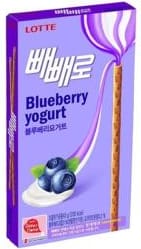
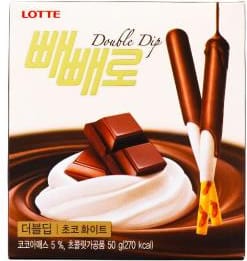
Every 11 November, Korean convenience stores stack boxes of Pepero, Lotte's chocolate-coated biscuit sticks, by the door. Buying them as a gift, or been handed some? Here is what the official Korean label data says about the 13 Pepero products we have records for.
The short version: every Pepero lists wheat and milk, nearly all list soy, most list egg, and two flavours contain peanut. None lists gelatin, meat or alcohol. The catch: most records have no allergen box, so read the ingredient list itself.
What Pepero Day is
Pepero Day (빼빼로데이, Ppaeppero Dei) falls on 11 November because the date, 11.11, looks like four thin sticks. Lotte launched Pepero in 1983, and the custom of giving it on this date is usually traced to students in the 1990s. People give it to friends, classmates, colleagues and partners, and it is one of the busiest sales days of the year for convenience stores, though not a public holiday. The same date is also Farmers' Day (농업인의 날), and some schools and groups hand out garaetteok, long sticks of rice cake, instead.
Milk, wheat and egg, flavour by flavour
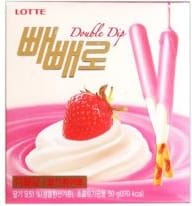
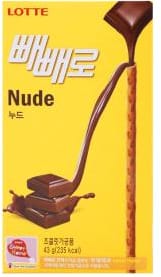
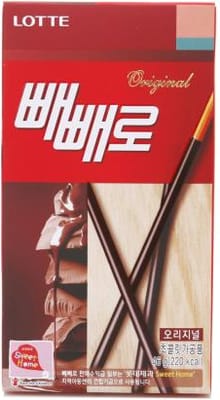
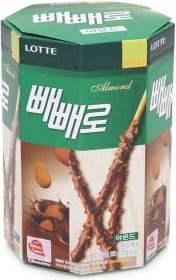
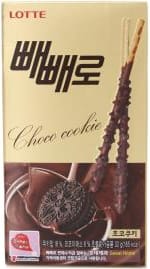
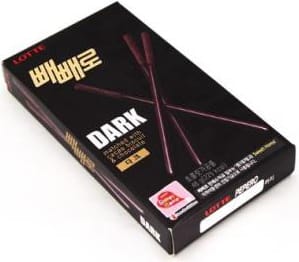
Wheat and milk are in all of them: the stick is wheat flour, and the coating is chocolate or compound chocolate (준초콜릿, jun-chocolate) made with milk powder, lactose (유당, yudang) or whey. Egg is what varies. The original Pepero, Almond, Choco Cookie, Dark, Coconut, White Cookie, Vanilla Black Cookie and both Double Dip flavours list 전란액 (jeonranaek, liquid whole egg) or declare egg. Nude Pepero (chocolate inside the stick), Nude Green Tea, Blueberry Yogurt and Pepero Skinny do not list egg in the ingredient text we have.
Almond Pepero and Choco Cookie Pepero contain peanut: their milk-chocolate coating lists 땅콩분말(땅콩), peanut powder, next to almond powder, and Almond Pepero is covered in chopped almonds. Almond is not on Korea's list of allergens that must be declared, so it shows up only in the ingredients, as 아몬드 (amondeu). Coconut Pepero lists coconut flakes (코코넛, kokoneot). None lists walnut or pine nut, the tree nuts Korea does require on labels.
Why most Pepero records have no allergen box
All the Pepero records come from the HACCP label dataset, and most have an empty allergen field. That means the record has no allergen box, not that the snack has no allergens. Korean ingredient lists often name the allergen in brackets anyway, as in 유당(우유) (lactose, milk) or 유화제(대두) (emulsifier, soy), which is how we read the flavours above. These records can be older than the box on the shelf, and they carry no shared-facility line, the sentence about other allergens handled in the same plant (같은 제조시설, gateun jejo siseol). That line is on the real packet, so read it there if traces matter to you. Pepero follows the usual Korean snack pattern of milk, soy and wheat:
Gelatin, meat, alcohol: what Pepero does not list
None of the Pepero records lists gelatin, pork, beef, chicken, lard or 주정 (jujeong, fermented alcohol). The fats are 식물성유지 (vegetable fat), shortening (쇼트닝) and palm oil, plus 가공버터 (processed butter), which is dairy. Halal: nothing in our data is halal-certified, and the emulsifier (유화제), enzymes (효소제) and flavourings (합성착향료) do not state their source. Vegetarian: no meat or fish is listed, but milk is in all of them and egg in most. Vegan: none, because every record lists milk.
Buying Pepero as a gift: how to check
Gift sets often bundle several flavours, so read each inner packet. Find 원재료명 (wonjaeryomyeong, ingredients) and look for 땅콩 (peanut), 계란 or 전란액 (egg), 우유 (milk), 밀 (wheat) and 대두 (soy). Then look for the allergen box, often printed as a list ending in 함유 (hamyu, contains), and the shared-facility sentence. For someone with a peanut allergy, avoid Almond and Choco Cookie and check the facility line on the rest. For an egg allergy, Nude, Nude Green Tea, Blueberry Yogurt and Skinny are the flavours to compare first. Handmade sticks sold around 11 November are not in our data, so ask the seller.
Numbers are computed from the Food QR label data published by Korea’s Ministry of Food and Drug Safety and update every week. Products without allergen data (460) are excluded.